Let us have a walk round the Dìèín ZOO to discover nearly unknown, rare or scarcely bred animal individuals from animal kingdom. We shall introduce:
  • „The smallest cow of the world“ (Mountain anoa)
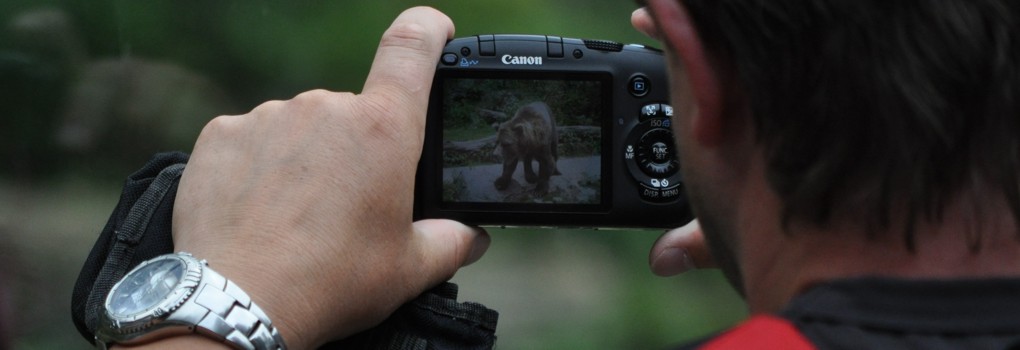
  • „There live Siegfried and Helga (Grizzly bears)
  • „We are too beautiful - that is the trouble“ (Persian leopard )
  • „Feeding and petting allowed“ (Children’s ZOO)
  • „A pig or a deer“ (Babirusa)
  • „Catching fish without a fishing rod“ (Fishing cat)
  • „A gallery of precious gems of Asian mountains (Pheasants)
  • „Red Indian guards“ (Red-legged seriemas )
  • „A kingdom of zealous labourers“ (Ants)
  • „One is barking and the other is shooting“ (Prairie dogs and North American porcupines)
  • „Who is the biggest rodent of the world?“ (Capybara)
  • „Cleanliness first! (Racoon)
  • „Fastidious beaks“ (Lories)
  • „Are you a diver?“ (Goldeneye)
  • „Hissing smart fellows“ (Black storks)
  • „A mysterious cat from the heart of jungle“ (Jaguarundi)
  • „Speaking eyes“(Black mangabey)
  • „A rarity from Sulawesi“ (Sulawesi crested macaque)
  • „A beauty with the finest wool“ (Vikuna)
  • „White acrobats“ (Rocky Mountain goat)
  • „Faithful friends and helpers“ (Donkeys and Hucsul horses)
  • medved
    anoa horskýMountain anoas, the tiniest wild buffalos of the world are the first inhabitants to be seen in the ZOO . They live on Sulawesi Island (Indonesia) and belong to the most endangered species on earth. No information exist about the number of individuals living in the wild. The animals you are watching belong to theEuropean group consisting of ten individuals only. Besides Dìèín ZOO and their habitat you can see them only in Krefeld ZOO in Germany from where these males and one female have come (born in 1993, 1994, 1995 respectively). The pair living in our ZOO was baptised by the Indonesian ambassador in the Czech Republic himself. The male is called Basso and the female is Noni. They have living in the ZOO since 1997.  

    Behind the anoa enclosures there beginsa Bear´s Trail and at the end of it you will meet real grizzly bears that have lived in the ZOO since 1983. The male is Siegfried and the female is called Helga, and they were born in Leipzig in 1983 and 1982 respectively. Their beautiful enclosure was built in 1995 - 1997 and occupies an area of 1,000 square metres. To some extent it reminds a mountain scenery where these third largest bears of the world live in the wild. When watching them, please do not lift up the children on the railing and do not lean over it!


    Levhard perskýThe bears are admirable and strong beasts of prey, but Persian leopards are in no case less beautiful. Bilbi - the male was born in the ZOO in Dvùr Králové in 1987 while female Thalia was imported from Münster (Germany) in 1987. In the wild these wonderful cats pay for their extraordinary elegance, and are on the edge of extinction now.  
    Dìtska ZOOBehind the facilities of big predators there awaits a surprise, particularly for children. Our Children’s ZOO is a territory where one can forget that feeding and petting animals is prohibited. You can give a cuddle to the tiniest sheep in the world (Ouessant breed imported from France) or dwarfed Cameroon goats. Please offer them granules from the vending machine, and save the local grass and branches of trees that we keep so carefully.  
    Babirusa celebeskáIn front of our Children´s ZOO there is an enclosure of one of the rarest species living in our ZOO - the babirusa (wild South-Eastern Asiapig from Sulawesi). It is a kind of wild pig that utterly differs from any other relative species. A characteristic feature that we see in the boar - canines (eye-teeth) that grow through the upper jaw cannot be seen in any other species. Nevertheless the canines are not used in fighting, it is just their „sign of power“. These animals are becoming scarce in the wild, and in European ZOOs only 80 babirusas can be seen. Caspar - the male (1995) was born in Krefeld (Germany), and female Uta (1993) saw the light of the world in Saint Martin la Plaine (France) . This pair was the first babirusas ever imported to a ZOO in the Czech Republic. Their kid weighed slightly over 0.5 kg and the size was not much over 20 cm. The European ZOOs as a whole report about 10 newborn animals of this unique species in total per year.  
    Koèka rybáøskáWhile watching babirusas, behind your neck there are cats, that can catch fish. Yes, it is no mistake, they really can do it, and they are able to pass this skill to their kittens if bred in captivity. The only problem is a lack of opportunity to meet enough suitable living fish. But from time to time they can train and show the speed of their fore paws.  
    Bažant diamantovýLeaving the fishing cats behind, we walk uphill to the pheasants´ exposition. The birds of pheasant family are generally known and favourite creatures particularly due to their wonderfully coloured plumage seen in most pheasant cocks. Pheasant hens, e.g. those of rare Edwards´ pheasant, are inconspicuously brownish coloured not to be noticed by their enemies during brooding and hatching period. In spite of their alertness their population in the wild is decreasing, and that is why we consider them very rare inhabitants of our ZOO. An exception among pheasants with different colouring of males and females is the whiteeared pheasant. Both cocks and hens of this robust bird are boasting of their whitish colouring. Also their cohabitation in pairs is a feature quite unusual in pheasants.  
    SeriemaBesides the pheasants an aviary with the noisiest birds you can imagine waits for youdue to their piercing voices. In case of danger the seriema reliably warns the others but they themselves rely on the velocity of their long legs. But they are no timid fellows, ready to quickly defeat smaller snakes and even swallow them.  
    The next stop will be at the smallest and the most numerous inhabitants of our ZOO. Ants surely deserve our care and attention. They remove a lots of harmful insects from the forest, and take part in the preservation of healthy environment.  
    Psou prerijníA used to be abode of our grizzly bears is now, after a proper renovation, inhabited by other tenants - a community of prairie dogs and North American tree porcupines. The studious prairie dog digs large underground cities formed by the labyrinths of corridors and chambers. At the same time they do not neglect to keep guard on the surface. The guards warn the others by producing barking sounds from which the name of these animals has been derived. On the other hand, such a North American tree porcupine does not try to escape when meeting an enemy. Its short and awkward legs would not help it much. These animals employ other tactic. They protect themselves by accurately targeted hits of their prickly tail. Released prickles then painfully thrust enemy’s muzzle of paw, and because the tips then swell with blood it is difficult to remove them .  

    KapybaraWe still remain with the fauna of American continent but let us move down to the South. It is an opportunity for those who want to see the biggest rodent without travelling to Amazon river basin. Capybaras - gentle vegetarians, good swimmers and divers are really the biggest rodents of the world. The ZOO in Dìèín is number one in the Czech Republic in their captive breeding. The first Capybara ever born in our country was born in 1988 right here in this ZOO. Èája chocholatá The mara or Patagonian hare - another guinea pig’s relative transfers us into the scorched plains of Patagonia. Their big eyes are protected by long eye lashes against hot sun and sand, skinny legs with little hoofs are suitable for digging burrows in which their offspring then come into the world. We then have to follow our last South American rodents to the jungle. With their colour changing surface and shape of their body, the agouti is well adapted to the life in a dense vegetation. Their strong hind legs make them as swift as our hares. The agouti likes various kinds of fruit which they carefully bury into the soil. Another South American in this enclosure - a relative of the waterfowls - is called crested screamer. In spite of its robust body the crested screamer is a good swimmer and ready flyer. Crested screamers are gentle and friendly creatures but when attacked they defend themselves skilfully using two spurs located at the elbow of their wings.

     
    The South American fauna is not far from the racoonenclosure. These little bear-like animals with a black mask over their eyes are famous for „washing“ various things that fall into their possession, including food and their offsprings. They often find their food on river banks, and must clear it of mud, etc. It is probably the reason of their typical behaviour that gave rise to their name in Czech language (washing bear). The racoons are excellent in climbing , and when endangered,they can put on death to deceive the other party.  
    After you have left racoons you will delight in varied colours of our parrots - lories. Wonderfully coloured lories feed on a strange stuff. No nuts or seeds but the nectar from blossoms or fruit juice that they collect by means of their brush-like tongue. Therefore in captivity they often relish soft fruit, stewed fruit, fruity baby food, and syrup or pudding.  
    Hohol severníOn a small pond with ducks there are goldeneyes coursing, particularly known as perfect divers. During a mating season the drake shows off its elegant black and white array but in summer both sexes are inconspicuously brown and white. As they nest in hollow trees the ducklings have no other choice than, soon after being hatched, take the plunge into the world headfirst down, often from a height of several meters.  
    Èáp èernýDucks neighbours - black storks - are far from being as gregarious as their white relatives. They do not long to make nests close to humans at all. If you are lucky, you can spot them in remote areas of the Elbe Sandstone Rocks, they live in seclusion in forest or in rocky ravines. There is also no beak clapping usual in the white stork while these black birds communicate by hissing.  
    Sovice snìžnáIn front of the water birds kingdom you are carefully watched by owls. One of the most beautiful, the snowy owl has a purely practical reason for its miraculously dazzling white plumage. It lives in lands of permanent snow and ice where the white colouring is the only one inconspicuous. They have to try to hunt down as many small rodents as possible because the quantity of food regulates the number of their offspring.  

    Next to the owls there dwells a pair of wild cats called jaguarundi. Though they may not look friendly, they say that South American Indians were able to tame them and keep them as domestic cats. Unlike other cats the jaguarundi does not mind water. It is a good swimmer, and that is why it is sometimes called „the otter-cat“.


    While you may still admire those strange jungle cats your children already watch monkeys - their favourite animals. These restless black mangabeys with their typical crest have a characteristic way of communication: in the twilight of African jungle the movement of their lightly coloured eye lids can provide signals for other members of the community.  
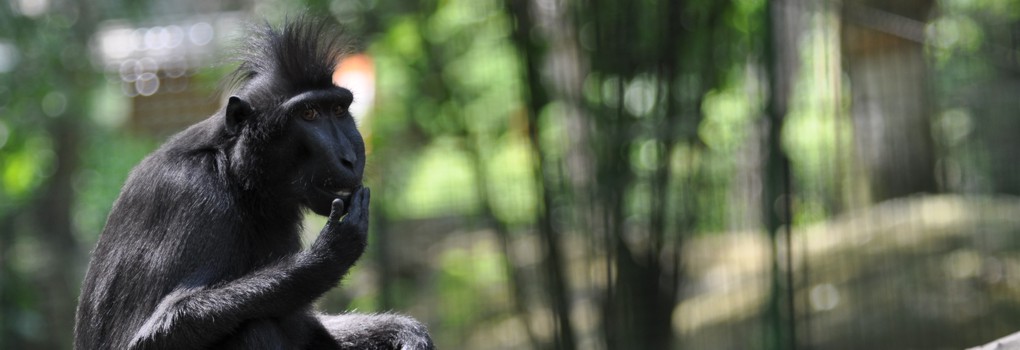
    Other rare monkeys with similar crest are ebony-like Sulawesi crested macaques from the heart of Sulawesi Island. Unlike the above mentioned jaguarundi, they have just the opposite part of the body markedly coloured. Their hip tubercles become swollen particularly in mating period. The plate with EEP letters next to the information board about the species (as well as with several other animals) means that our ZOO is involved in European Endangered Species Breeding Programme of this species. These programmes link European ZOOs, and concentrate their efforts on the conservation and breeding of some particularly endangered species.  
    The black-cheeked guenon belongs to the jolliest representatives of their kind. They are all the time in motion - always very active and lively creatures. They store in their highly developed buccal bags, like in pockets, everything they are interested in and cannot scrutinise and consume immediately. Be aware that feeding and passing any objects to the monkeys in the ZOO is strictly prohibited. Please have this in mind, and help us to protect both yourself and the health of our animals .  
    Lama krotkáThe llama has originated as a result of the domestication of wild guanacos. Their relatives, the graceful vicuna have had much worse experience with people. These animals have been nearly eradicated because of their finest warming wool in the world. Today, due a strict preservation, they are again growing in numbers. Nevertheless they are still considered rare species which are scarcely to see even in ZOOs.  
    Kamzík bìlákTo meet the Rocky Mountains goat you should travel to the snowy summits of the Rocky Mountains. Thanks to their warming thick white hairs they are well adapted to the harsh climate in the mountains. Also the special structure of their hooves which after each jump-down stick to the surface as small suckers help them to survive in such dangerous rocky terrain.  
    Osel domácíThe last stop on our ZOO trail is devoted to inconspicuous and modest helpers of the man - to the Hutsul horse and donkey. Hutsul horses belong to primitive, tough and resistant races of horses from the South East Europe. Donkeys were domesticated in North African regions. Both animal species have been good servants of people for ages - they carried load and riders, pulled carts, and people utilised their meat and skin. Now our Hutsul horses and donkeys are used mainly by children: they ride them on various occasions in the ZOO or in the town, and the members of the rider’s club learn on them how to care for animals.  
    We finish our tour in children’s playground. Here you can try a Survival Game - on the trail you can enter the spirit of endangered species and try to survive, i.e. to reach the goal after overcoming all the risks of the life in wilderness. Younger children will surely enjoy creeping through a construction of a wooden castle or the see-saws and wooden animals. These were made by the students of the Institute of Art and Design from Ústí nad Labem, within the framework of our traditional Colourful Week - open air art and design workshop.  
    If you are lucky enough (or informed in advance) you will visit the ZOO during any of our regular entertaining and educational programmes for young and older children that take place in local amphitheatre. If you acquire during any of these events or on the ZOO trail at least a bit of understanding that the protection and breeding of animals in ZOOs is an integral part of the world-wide nature conservation which you can also take part in (in the form of a so called adoption of animals) our effort was not vain attempt.

    MAP OF OUR ZOO

    1. Bear's trail
    2. Children zoo – guinea pigs
    3. Bears
    4. Wallabies
    5. Birds House
    6. Leopards – EEP, R
    7. Children zoo – sheep, goats
    8. Squirrels
    9. Fishing cats – EEP, R
    10. Babirusas – EEP, R
    11. Pheasants- EEP, R
    12. Seriemas
    13. Hog deers and White-napped cranes – EEP
    14. Children zoo –rabbits, guinea pigs
    15. Racoons
    16. South America fauna – capybaras, agoutis
    17. North America fauna – porcupines, prairie dogs
     18. The Czech-Saxon Switzerland Exhibit – lynx – CZ
    19. – dtto– Wild cat – CZ
     20. dtto – fox – CZ
     21. dtto – grouse birds – CZ
     22. dtto – marten carnivores
     23. dtto – marten carnivores
     24. dtto – marten carnivores
     25. dtto – storks
     26. dtto – minks – EEP, CZ
     27. dtto –amphibians and reptiles– CZ
     28. dtto – songbirds
     29. dtto – pigs
     30. dtto – raven birds, owls – CZ
     31. dtto –birds of prey– CZ
     32. dtto –owls– CZ
     33. dtto –owls– CZ
     34. dtto –wolves– CZ
     35. dtto – roe deer, rabbits
     36. dtto –chamois
    37. Mountain ungulates – vicunas – EEP
    38. Mountain ungulates – chamois
    39. Mountain ungulates – lama glama
    40. South America fauna –cavies, screamers, capybaras, agoutis
    41. Hutia-Conga – R
    42. Margay – EEP, R
    43. Jaguarundi
    44. Owls– CZ
    45. South America fauna – clawed monkeys
    46. Waterfowl – CZ
    47. Life at water – black storks, night-herons – CZ, ESB
    48. Monkeys – EEP, ESB, R
    49. Donkeys
    50. Huculs
    51. Mountain anoa– EEP
    52. The Survival game

    EEP – species registered in European endangered program
    ESB – species watched within the European studbook
    R – species registered in the Red Data Book of endangered species IUCN
    CZ – species protected by the Czech Republic laws

    Service for visitors – important spots and objects:
    AEntrance – Exit, Box office, Souvenirs shop, Information office
    B Administrative building – the ZOO management, Information office
    C Zoologist, Enlightenment and education, Information office
    D Refreshment room ”U kamzíka” (At a Chamois)
    E Sweetshop ”U medvìda” (At a Bear)
    F Toilets
    G Children Area and Wood Theatre
    H Riding Hall

    logotopldalsi


    Copyright 2000, Designed by New Space spol. s r.o. 
      e-mail:webmaster@space.cz
    eMerite